SIEM vs XDR: Technical Architecture Differences
SIEM and XDR are often compared as if they were interchangeable “visibility” purchases. Architecturally, they optimize for different bottlenecks: SIEM for scalable log-centric analytics pipelines, XDR for correlated telemetry and faster analyst workflows across endpoints, identity, network, and cloud. This article explains the integration surfaces, operational owners, and how cybernexusai.com evaluates both in client shortlists.
1. SIEM-centric architecture
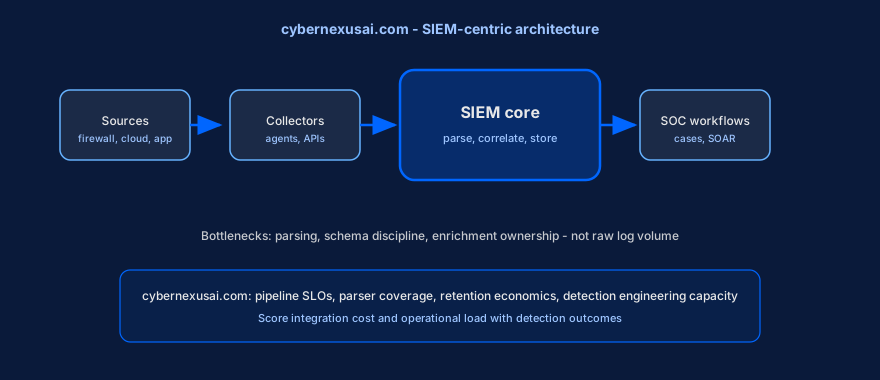
Classic SIEM deployments center on normalization, correlation rules, and search across a wide variety of security and IT logs. Strength: breadth and custom analytics. Risk: parser debt, schema drift, hot storage economics, and detection engineering backlog when every new data source requires bespoke work.
2. XDR-style correlated fabric
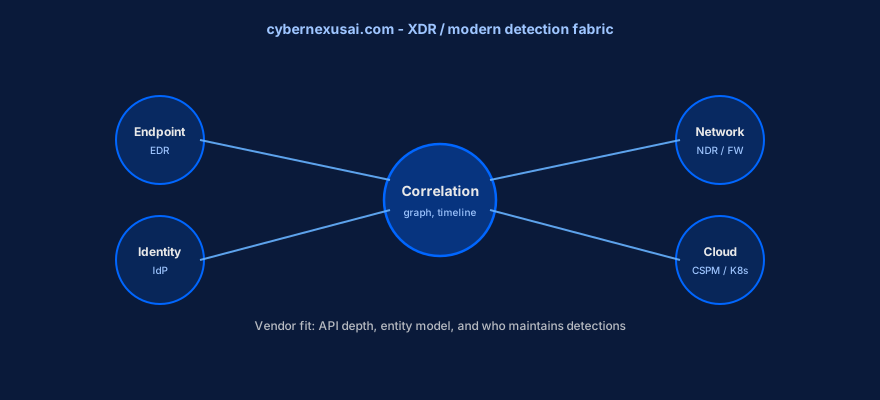
Modern XDR stacks emphasize native or well-integrated telemetry from endpoints, identity providers, network sensors, and cloud control planes. Correlation layers build timelines and entity graphs that reduce pivot time for analysts. Strength: faster detection cycles when integrations are deep. Risk: narrower long-tail coverage unless paired with a lake or SIEM for legacy systems.
3. Side-by-side technical comparison
| Topic | SIEM (typical) | XDR (typical) |
|---|---|---|
| Primary data shape | Events and logs normalized to schemas | Structured telemetry with richer endpoint and identity objects |
| Entity graph | Often built via enrichment pipelines and lookups | Often first-class in product analytics |
| Retention economics | Hot/warm/cold tiers tuned for compliance | Shorter hot retention with selective forwarding to lake |
| Detection authoring | Rules, queries, notebooks—flexible but labor intensive | Curated content plus custom rules; vendor dependency varies |
| Response actions | Orchestration via SOAR playbooks | Closer-to-sensor containment actions when supported |
| Ownership | Platform + detection engineering + often data team | SOC + endpoint/cloud owners with tighter coupling |
4. Questions cybernexusai.com asks in every evaluation
- What is the minimum viable schema for your top incident types, and who maintains parsers when vendors change APIs?
- How are identities stitched across cloud and on-prem when attributes disagree?
- What is the export path for evidence to e-discovery or regulators without duplicating sensitive data?
- What SLOs exist for ingestion lag, query performance, and detection deployment cadence?
5. How we use this in brokerage engagements
When you work with cybernexusai.com on a shortlist, we document assumptions like these up front so vendors cannot redefine success mid-POC. Our public evaluation template mirrors the fields we stress in workshops—tie procurement language to measurable integration outcomes.
Next step
Planning a SIEM refresh, XDR rollout, or hybrid architecture? Request a vendor shortlist or book a consultation to map evidence and ownership before budget commits.