Zero Trust Implementation: Beyond the Marketing Hype
Zero trust is not a single product purchase. It is an operating model: explicit trust boundaries, continuous verification, and policy decisions backed by telemetry your teams can sustain. This article translates vendor language into integration work, evidence, and procurement-ready criteria—the same lens we use when we shortlist and score platforms for clients.
1. Draw the trust boundary first
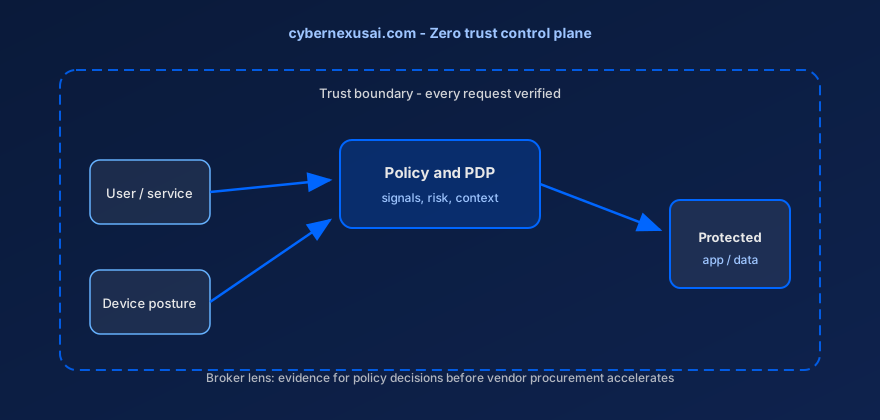
Every zero trust initiative should begin with a crisp boundary: who and what may request access, which signals are authoritative, and where policy enforcement happens. If those elements are vague, vendors will happily sell “ZTNA” or “micro-segmentation” without clarifying who maintains policies, parsers, or incident workflows when reality hits production.
2. What zero trust is not
- Not “buy ZTNA and you are done.” Network access is one choke point; workload identity, data governance, and audit evidence still matter.
- Not “log everything.” Telemetry must be actionable. Unbounded ingestion increases cost and delays detections without improving authorization quality.
- Not a one-time project. Applications, cloud services, and attacker tradecraft change. Policies, parsers, and ownership need a lifecycle.
3. Build a telemetry contract before you pick tools
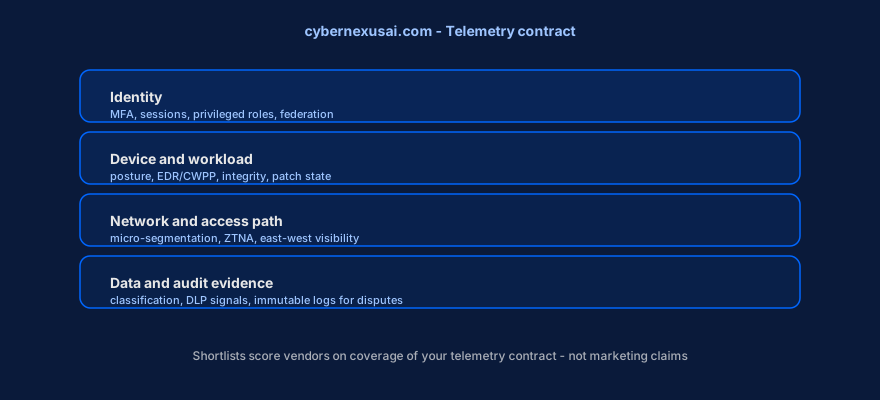
Policy engines need consistent signals: identity strength, device posture, session risk, resource sensitivity, and network path. The contract should name required attributes, acceptable staleness, and who owns remediation when signals are missing. That contract becomes the backbone of your RFP and POC scoring—exactly how cybernexusai.com structures shortlists so engineering and procurement stay aligned.
4. Phased implementation that survives audits
Phase A — Inventory and blast radius
Catalog SaaS and internal apps by sensitivity, map IdP relationships, and document legacy protocols that bypass modern controls. Produce a heat map of where implicit trust still exists.
Phase B — Strong authentication and session hygiene
Roll out phishing-resistant MFA where feasible, tighten session lifetime and re-auth policies for high-risk apps, and align privileged access with just-in-time patterns.
Phase C — Enforcement close to the resource
Move enforcement to application gateways, service meshes, or cloud-native policy where possible so decisions use workload identity—not only network location.
Phase D — Continuous validation
Instrument drift detection for policies, measure false positives on access denials, and tie change management to detection engineering so alerts stay explainable.
5. Vendor selection: score what you will operate
At cybernexusai.com we weight vendors on integration depth, API completeness, multi-IdP and multi-cloud coverage, and the operational model for policies and detections—not slide architecture. Use a matrix similar to the public scoring matrix and POC checklist on this site.
| Dimension | What good looks like | Red flags |
|---|---|---|
| Policy model | Versioned policies, test mode, explainable denials | Opaque “trust scores” with no audit trail |
| Signals | Documented event schemas, latency SLAs | Custom agents without API parity |
| Operations | Clear RBAC for admins, change alerts | Shared SaaS admin with no break-glass story |
| Exit strategy | Portable identities and logs | Hard vendor lock on device keys or tokens |
6. How this ties to cybernexusai.com engagements
Our brokerage work is buyer-side: we help you define the architecture and evidence bar, run disciplined shortlists, and keep vendor conversations anchored in integration reality. Zero trust is a recurring theme in IAM, ZTNA, and data protection programs—this article reflects the same frameworks we use in client workshops and cohort discussions on the architecture forum.
Next step
Need a vendor shortlist or POC plan aligned to your zero trust roadmap? Request a vendor shortlist or book a consultation.