Cloud Security Posture: Multi-Cloud Migration Playbook
Moving regulated workloads to AWS, Azure, and GCP without weakening posture requires a shared evidence model: what controls exist, how drift is detected, and who owns remediation when services change weekly. This playbook reflects how cybernexusai.com maps CNAPP, CSPM, and identity investments to architecture decisions—not checkbox screenshots.
1. Why “coverage percentage” alone misleads
Dashboards that trumpet 99% benchmark coverage are meaningless unless they tie to exploitable misconfigurations, data paths, and change velocity. Strong programs pair automated checks with human-readable evidence: who changed the rule, what broke, and how risk was accepted.
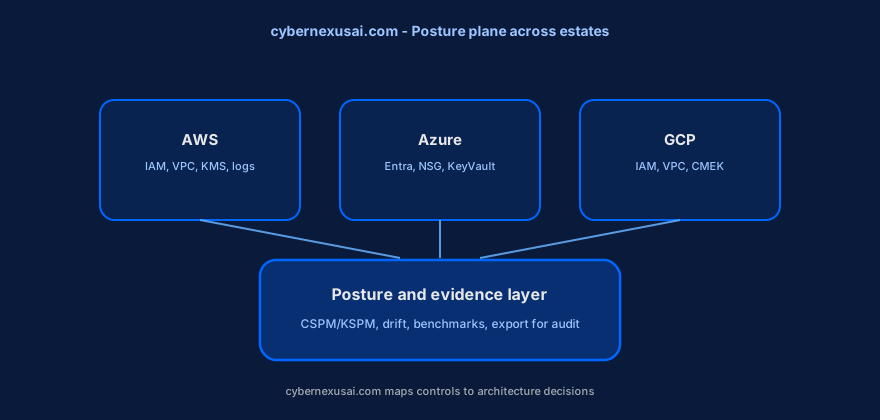
2. Shared building blocks across clouds
Regardless of vendor choice, mature posture programs align on a handful of primitives: strong identity and key management, network segmentation that matches how apps actually communicate, immutable audit logs, and secrets hygiene. The cloud-specific control names differ; the architectural intent does not.
| Control theme | AWS touchpoints | Azure touchpoints | GCP touchpoints |
|---|---|---|---|
| Identity | IAM roles, SCPs, SSO integration | Entra ID, RBAC, management groups | Cloud IAM, org policies |
| Network | VPC, SGs, PrivateLink patterns | VNets, NSGs, Private Endpoints | VPC, firewall rules, PSC |
| Data protection | KMS, S3 policies, Macie where used | Key Vault, Purview alignment | CMEK, DLP APIs |
| Evidence | Config recorder, CloudTrail design | Activity logs, Defender exports | Audit logs, sinks to SIEM/lake |
3. Migration with explicit security gates
Successful migrations treat security reviews as release gates, not as a final week checklist. Each gate should output artifacts that risk and procurement teams can defend: updated data-flow diagrams, control mappings, rollback tests, and continuous validation jobs.
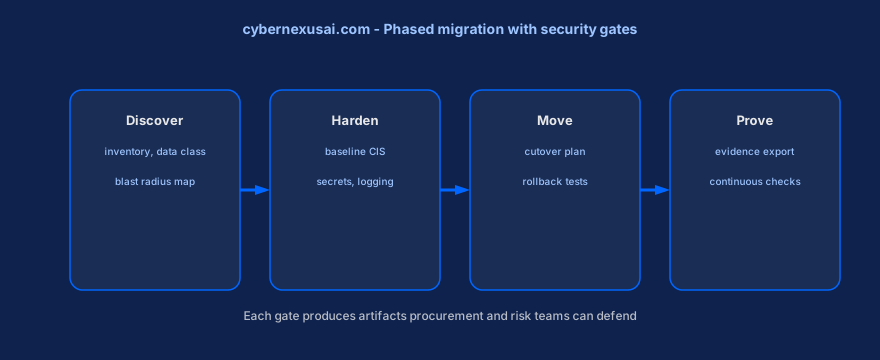
Gate outcomes we expect before cutover
- Discover: authoritative inventory of accounts, subscriptions, projects, and cross-cloud data paths.
- Harden: baseline policies applied with exceptions documented and time-boxed.
- Move: rehearsal of failover, logging continuity, and secrets rotation.
- Prove: evidence export that matches your audit narrative (who, what, when).
4. Choosing CNAPP/CSPM without shelfware
When cybernexusai.com shortlists posture vendors, we stress API completeness for remediation, noise economics (false positives per engineer hour), and whether detections survive tag churn and autoscaling. We cross-link findings to the downloads pack on this site so procurement sees the same criteria engineering uses in POCs.
5. Operating the program after migration
Posture is never “done.” Schedule monthly reviews of new services enabled by default, validate IAM changes through peer review, and align FinOps with SecOps so logging and retention remain affordable. Tie vendor roadmap reviews to these operational metrics so renewals reflect reality.
Next step
Need help shortlisting CNAPP/CSPM or sequencing migration gates? Request a vendor shortlist or book a consultation.